1. Introduction
Micro-nano biosensing and manipulation stands as an interdisciplinary frontier integrating modern micro/nano manufacturing and information science. Centered on micro-electro-mechanical systems (MEMS) as its core technical platform, this field aims to realize the sensing, conversion and manipulation of physical, chemical and biological signals at micrometer to nanometer scales.
This program consists of more than ten thematic lectures delivered by speakers from multiple countries and regions. Covering micro/nano fabrication, advanced sensing, flexible electronics, microfluidics and other key dimensions, the lectures integrate mechanical engineering, electronic information, automatic control and other disciplines. They will provide a comprehensive analysis of the developmental history, current research progress, as well as emerging opportunities and challenges lying ahead in the field of micro-nano biosensing and manipulation.
2.Registration
(1)Please click the link to register the programand choose Section“Biosensing and Microelectromechanical System”before July11th. (https://v.wjx.cn/vm/hFwczOu.aspx#). All attendees that follow our lecture series completely will get a summer course Certificate of Completion issued by Xi’an Jiaotong University.
(2)After registration, please scan the QR code to join the program WeChat group for further information.

(3) Contact Information
Phone number: 18091799283/029-82663430
Email: chuanyu.zhang@xjtu.edu.cn/nacongxiu@xjtu.edu.cn
3.InternationalTeaching Faculty
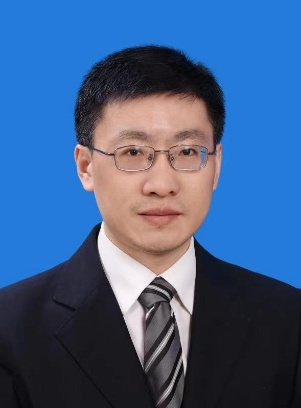
Prof. Xueyong Wei received his PhD. in Mechanical Engineering from the University of Birmingham in 2009, and then he worked in the University of Cambridge as research associate before joined Xi’an Jiaotong University in 2012. Currently, he is the head of School of Instrument Science and Technology and the leader of Shaanxi Innovation Team on Micro/Nano Sensing and Measurement Technology. His main research interests include micro/nano sensing and testing. In this field, he has published over 150 papers and 50 patents. He has won the second prize of the National Science and Technology Progress Award, the first prize of the Shaanxi Provincial Science and Technology Progress Award, the first prize of the Shaanxi Higher Education Teaching Achievement Award, the first prize of the Science and Technology Progress Award of the China Instrument and Control Society, the first prize of the Science and Technology Award of the Shaanxi Provincial Institute of Mechanical Engineering, the Shaanxi Youth Science and Technology Award, and the FK Bannister Award of the University of Birmingham.

Professor Elfed Lewis earned his BEng (Hons) and PhD in Electronic Engineering from the University of Liverpool. He holds titles of Chartered Engineer, Chartered Physicist, Fellow of IET, Institute of Physics and Royal Society of Chemistry, as well as IEEE Senior Member. Joining the University of Limerick in September 1996, he now serves as Professor of Electronic and Computer Engineering and founding director of the Optical Fibre Sensors Research Centre (OFSRC). His research focuses on innovative fibre-optic sensors for biomedical radiotherapy dosimetry, wearable emergency responder monitoring, vehicle exhaust detection, marine and water quality surveillance, and mid-infrared photonic devices. As principal investigator, he has secured over€4.8 million via EU Horizon, Irish national funding and industrial grants. He has published 223 peer-reviewed journal papers and 235 conference articles, with a Scopus h-index of 40; 82.1% of his outputs involve international collaborations. He has supervised over 34 PhD graduates and co-mentored dozens of overseas doctoral students from China, Southeast Asia and Pakistan. He chaired top-tier conferences including IEEE Sensors 2011, EWOFS 2016 and IEEE WF-IoT 2019, and works as Subject Editor for MDPI *Sensors*. His honours cover the 2024 Finkelstein Award, Fulbright Scholarship, IEEE Distinguished Lecturer and Zhejiang West Lake Friendship Award for China-Ireland academic cooperation. As an experienced educator, he designs analogue electronics modules and integrates sensing research into teaching. He maintains long-term joint research and student exchange partnerships with Harbin Engineering University, Wuhan University of Technology and other Asian universities, promoting cross-border photonics innovation.
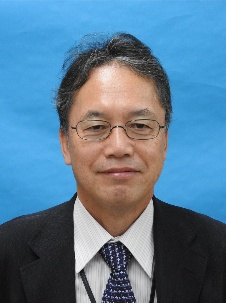
Professor Ryutaro MAEDA, currently affiliated with the School of Instrument Science and Technology in Xi’an Jiaotong University, is also Distinguished Emeritus Researcher at The National Institute of Advanced Industrial Science and Technology (AIST). He joined to AIST in Tsukuba in 1980, after finishing Master course in Graduate School of Tokyo University. He served as Director of UMEMSME (Research Centre of Ubiquitous MEMS and Micro Engineering) in AIST from 2010 to 2015 and served as Leader of several National Projects, such as “Green Sensor Network”, JST CREST program, FIRST program, JSPS etc. His current research interest includes application of wireless networked sensing for energy and safety management. He published more than 250 papers in MEMS and related fields.
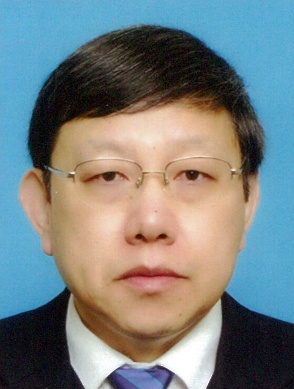
Mingcong Deng, Professor, Department of Electrical and Electronic Engineering, Tokyo University of Agriculture and Technology, Japan Member, Engineering Academy of Japan; Fellow of the Institute of Electrical and Electronics Engineers (IEEE), Chair, Technical Committee on Environmental Sensing, Networking and Decision-Making Technology, IEEE Systems, Man, and Cybernetics Society; Co-Chair, Technical Committee on Agricultural Robotics and Automation Technology. Professor Mingcong Deng’s research focuses on the design and applications of robust nonlinear control systems based on learning and operators. His work pioneers cutting-edge technological pathways for next-generation learning- and operator-based nonlinear safety control, exerting profound impacts on core sectors of industrial and life science systems, including fault detection, isolation and fault-tolerant control for nonlinear systems. Professor Deng has made outstanding contributions to the theories, system development and practical applications of learning- and operator-based nonlinear control technologies. His research outcomes are summarized in a monograph published under the IEEE Series on Systems Science and Engineering. He has authored over 580 papers in top-tier journals and flagship international conferences, covering a wide range of critical engineering applications: networked distributed control systems (DCS) for manufacturing processes, polymer electrolyte fuel cells, smart material actuators, wood drying systems, wireless power transfer systems, 3-DOF micro-manipulators, microreactors, and carbon dioxide capture and storage systems.
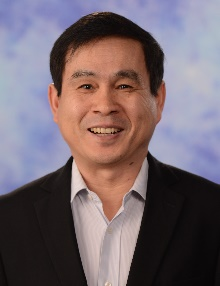
Professor Liqiu Wang holds the Otto Poon Charitable Foundation Endowed Professor in Smart and Sustainable Energy, and is a Chair Professor of Thermal-Fluid and Energy Engineering at The Hong Kong Polytechnic University. He also serves as Director of the PolyU-Zibo Technology and Innovation Research Institute.With over three decades of research at the crossroads of thermal fluid science, biomedical engineering, micro and nano technology, energy systems, and advanced manufacturing, Professor Wang is a truly interdisciplinary pioneer. His prolific output includes more than 590 peer reviewed papers, among which over 60 appear in top tier journals such as Nature, Science, PNAS, and Physical Review Letters. He is also author of 11 scholarly books and holds over 40 granted patents.His work has earned global recognition: he is a Clarivate Highly Cited Researcher (top 1% worldwide) and has been listed in Stanford University’s World’s Top 2% Scientists. With over 28,000 citations and an h index of 75, his influence spans both academia and industry. He is a recipient of the Optica Innovation Award, the Global Tech Innovation Award, and multiple gold and silver medals at the International Exhibition of Inventions of Geneva.Professor Wang serves on the editorial boards of more than 30 international journals, has founded and chaired numerous major conferences, and delivered over 100 plenary or keynote lectures across the globe. He also advises governments and industrial partners on strategic research directions – bridging the gap between fundamental science and societal impact.

Jose Higino Correia graduated in Physical Engineering from University of Coimbra, Portugal in 1990. He obtained in 1999 a PhD degree at the Laboratory for Electronic Instrumentation, Delft University of Technology, The Netherlands, working in the field of microsystems for optical spectral analysis. Presently, he is a Full Professor in Department of Industrial Electronics, University of Minho, Portugal. His professional interests are in micromachining and microfabrication technology for mixed-mode systems, solid-state integrated sensors, microactuators and microsystems.
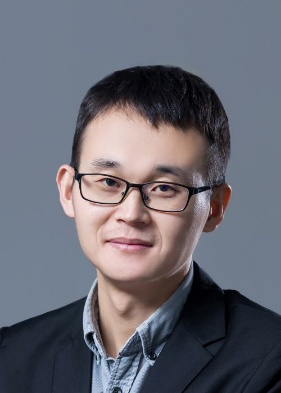
Chengbo Liu is a Professor at Shenzhen Institute of Advanced Technology, Chinese Academy of Sciences. He received his Ph.D and Bachelor degrees from Xi'an Jiaotong University (Ph.D Advisor: Prof. Zhenxi Zhang), each in 2012 in Biophysics and 2007 in Biomedical Engineering. His research interest focuses on multi-scale photoacoustic imaging instrumentation and translation. His team has published more than 140 journal papers, including Science Advances, Nature Communications and PNAS, with a total citation of more than 6500. He serves as an associate editor of Biophotonics Discovery and an editorial board member of Photoacoustics journal.
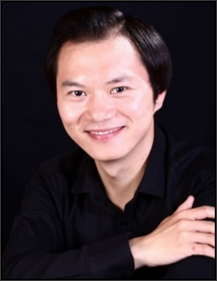
Liang Xiaoxuan, Sino-German Joint Training Doctor; Senior Scientist, Institute of Biomedical Optics, University of Lübeck, Germany. His research focuses on photodamage, laser plasmas, laser micro- and nanosurgery, and cavitation bubbles. He has published numerous peer-reviewed articles in journals includingOptica, PNAS, Photonics Research, Optics Express, Physical Review B and Journal of Fluid Mechanics, alongside several book chapters published by Springer and Wiley-VCH. He has delivered multiple invited oral presentations at international conferences. He serves as an Editorial Board Member ofBiomedical Instrumentationand a Young Editorial Board Member ofChinese Journal of Lasers. He is a member ofOpticaandSPIE, and acts as a peer reviewer for more than ten journals such asOptica, Optics Express, Optics Letters, Physics of Fluids, Journal of Fluid MechanicsandBiomedical Optics Express. As a core team member, he has participated in multiple Sino-German international collaborative projects, German Research Foundation (DFG) projects.
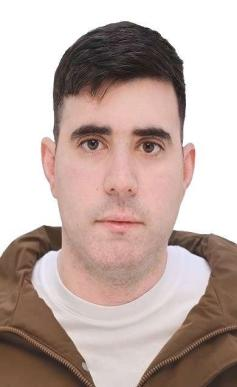
Nuno Miguel Matos Pires is a Portuguese scientist who has dedicated his career to the research of integrated lab-on-a-chip technology using organic semiconductor electrodes for the ultra-sensitive detection of biomarkers associated with chronic and infectious diseases. His focus lies particularly on the photoelectronic sensing properties of organic semiconductors, biosensor mechanisms, and integrated chip applications. He has authored and co-authored over 40 academic articles in the field of semiconductor photoelectronic integrated lab-on-a-chip research, which have been published in high-impact international journals such as Advanced Science, Biosensors & Bioelectronics, Journal of Biomedical Optics, Analyst and Lab on a Chip.
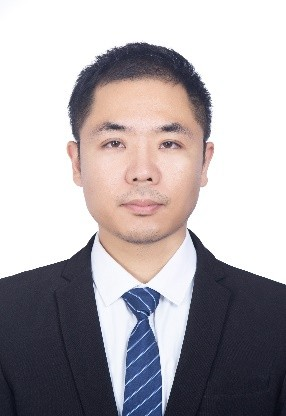
Zhang Chuanyu, Associate Professor, at the School of Instrumentation, Xi'an Jiaotong University. His research primarily focuses on microscale acoustofluidics, including micro/nanoscale acoustofluidic phenomena, bio-MEMS, and heat and mass transfer enhancement. He has been selected for the China Postdoctoral International Exchange Program and the 9th China Association for Science and Technology (CAST) Young Elite Scientists Sponsorship Program. He has led and participated in 15 projects, including the National Key R&D Program, the National Natural Science Foundation of China (NSFC) Youth Fund, and the Open Fund of the GF Science and Technology Key Laboratory, among others. He has published 30 SCI-indexed papers in journals such as Chemical Engineering Journal, Engineering, Physical Review E, and Microsystems & Nanoengineering. He received the 2022 Microsystems & Nanoengineering International Young Scientist Award.

Carlos Alberto Dorao serves as Professor at the Department of Energy and Process Engineering, Norwegian University of Science and Technology (NTNU). He earned his Nuclear Engineering undergraduate degree from Argentina’s Balseiro Institute and a Chemical Engineering PhD at NTNU, awarded the ExxonMobil Best Basic Research Doctorate Prize in 2006Norwegian .... Before joining NTNU in 2008, he conducted research at Argentina’s Bariloche Atomic Center and Norway’s SINTEF Materials. His core research spans multiphase heat-mass transfer, two-phase flow instabilities, microfluidic acoustic manipulation, and phase-field numerical modelling, with cross-disciplinary work on nuclear thermal hydraulics, LNG process design and biomedical droplet cell lysis. He has published over 130 peer-reviewed journal articles, supervised numerous PhD candidates, and delivers graduate courses on heat transfer, microfluidics and nuclear engineering. He also holds gas-liquid separation patents and co-founded a related tech startup, actively engaging in international conferences and industrial energy research outreach.